

Pottery and the Crooked Vase
Translated from the original Persian post. Images, if present, are from that post or thread.
Sometimes it’s worth slowing down. Believe me, for all its technology and complicated turns, life doesn’t move quite as fast as we think. Take a little time to read this story. I’m sure something like it has happened to you, too.
Summer had finally come, and school exams were over. It was a hot, dusty summer in Ahvaz. My father had decided I shouldn’t waste it. He said there were things I might never learn at school, and summer was a chance to make good use of my time.
Of all the possibilities, I don’t know why he chose pottery. Maybe because the workshop was close to Agha Bozorg’s house. I hated clay, though. The damp smell of it lingered under my nails. Even the sticky mud on dirt roads after a rain made me feel sick. But I said nothing. Each week I went reluctantly, made some little shape, put it in the kiln, and came home. In short, I wasn’t happy at all.
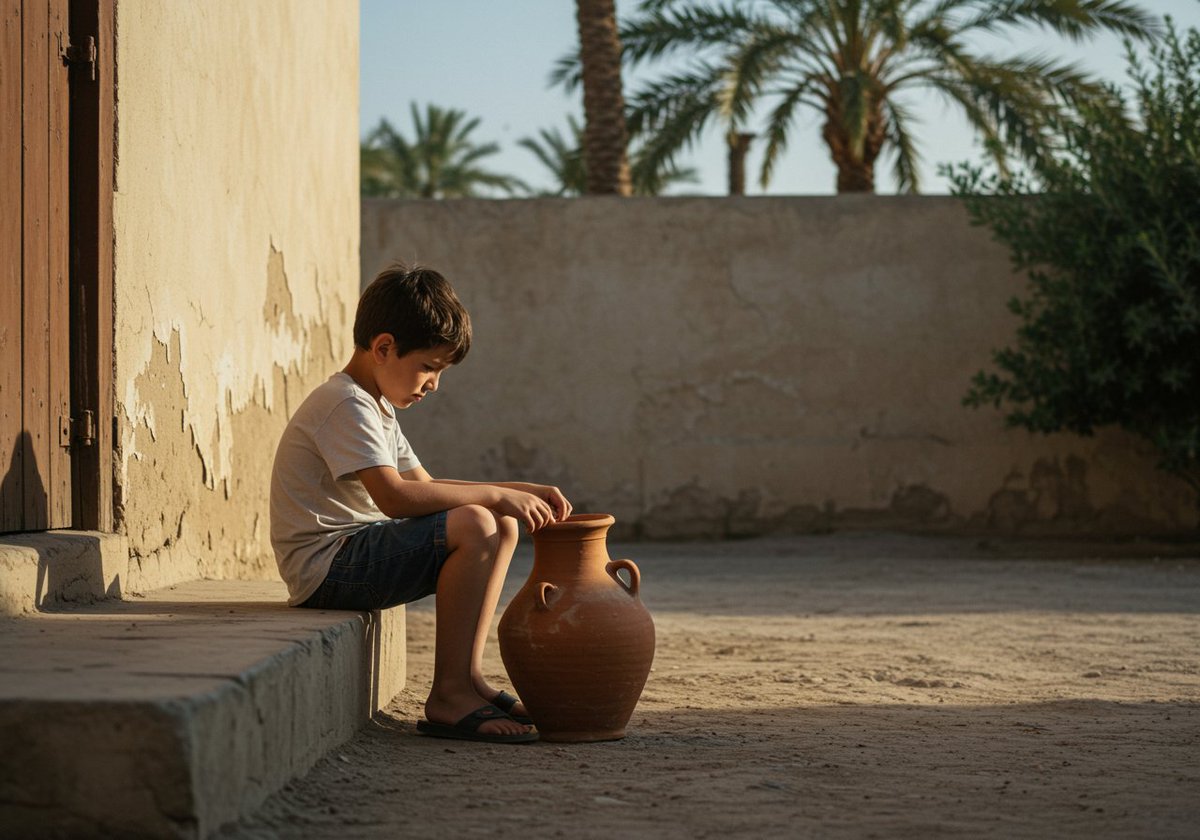
It was late August. One day I sat in the yard beside a vase I’d made. It was ugly and lopsided, and it seemed to be staring right at me. Part of me said, Well, you made it yourself. Another part hated it.
Just then Agha Bozorg came into the yard carrying two glasses of khakshir syrup. He sat beside me, looked at the vase, and said nothing. After a while he asked, “What’s on your mind, son?”
“Nothing.”
He paused. “Do you mean you aren’t thinking about anything, or that you don’t want to tell me?”
My throat tightened. “Agha Bozorg, I hate pottery. I wanted to take painting lessons.”
“Then why didn’t you say so sooner?” he asked gently. “Why didn’t you say in the first week that you didn’t want to go? I actually thought you liked it.”
“I was afraid Dad would be upset.”
He smiled, finished his drink, and said, “Well now. Let’s leave that aside. Want to go to Abadan with me tomorrow? I need to buy something at the sailors’ market. We might find a good toy, too. And we could have falafel for lunch.”
My eyes lit up. I said yes.
The next day we set off excitedly and boarded a bus. But once we were out of town, I saw a sign for the road to Andimeshk. Something inside me said this wasn’t the way. I didn’t speak up. Agha Bozorg sat lost in thought, and I pretended not to see the sign. I was afraid of upsetting him, or maybe something else held my tongue. Near Andimeshk I couldn’t stand it any longer.
“Agha Bozorg, weren’t we going to Abadan?”
He turned toward me, glanced at the road, and said, “Oh dear. We got on the wrong bus.”
I said nothing, but I was in turmoil. It was nearly noon. Once we arrived, we quickly found a bus back to Ahvaz and went home.
The bitter part was that we’d spent all that extra money on bus fares and lost the day. Agha Bozorg said the trip to Abadan wasn’t worth attempting now; we’d go another day.
When we got home, he sat beside me. “You saw we were going the wrong way. Why didn’t you say anything?”
“Honestly, Agha Bozorg, I was afraid you’d be upset.”
He spoke softly. “Son, people make mistakes sometimes. That’s natural. What’s worse is carrying on with a mistake, especially once you know you’re headed the wrong way. The longer you wait to get off the bus, the harder it is to go back. It costs more and takes longer. You might even run out of time to reach your destination.”
He paused, then continued. “Sometimes, out of embarrassment, fear, or politeness, you silence that voice inside you. But it’s usually right. Learn to say, ‘This isn’t my road,’ sooner, even if other people are upset. In the end, you’re the one who arrives late.”
My compatriot, my dear friend, a part of my own flesh: on the road of our national revolution and our country’s freedom, we sometimes fall in with the wrong people and groups. A friend introduces us, or we think these people are our friends, and out of reluctance to offend them we stay where we shouldn’t. We put up with the wrong people. But the longer we stay, the longer we endure it, the more we watch the gears of our energy wear away. Eventually it may be too late.
We don’t have much time left, or much energy to burn on the wrong people or on politeness.
So we must stay focused and, at our Shah’s command and for the sake of our homeland, keep moving without hesitation. We must not let the wrong roads and the wrong people drain us. That’s all.
Long live Iran.
Long live the Shah.