


Agha Bozorg and the Bedroom Window
Translated from the original Persian post. Images, if present, are from that post or thread.
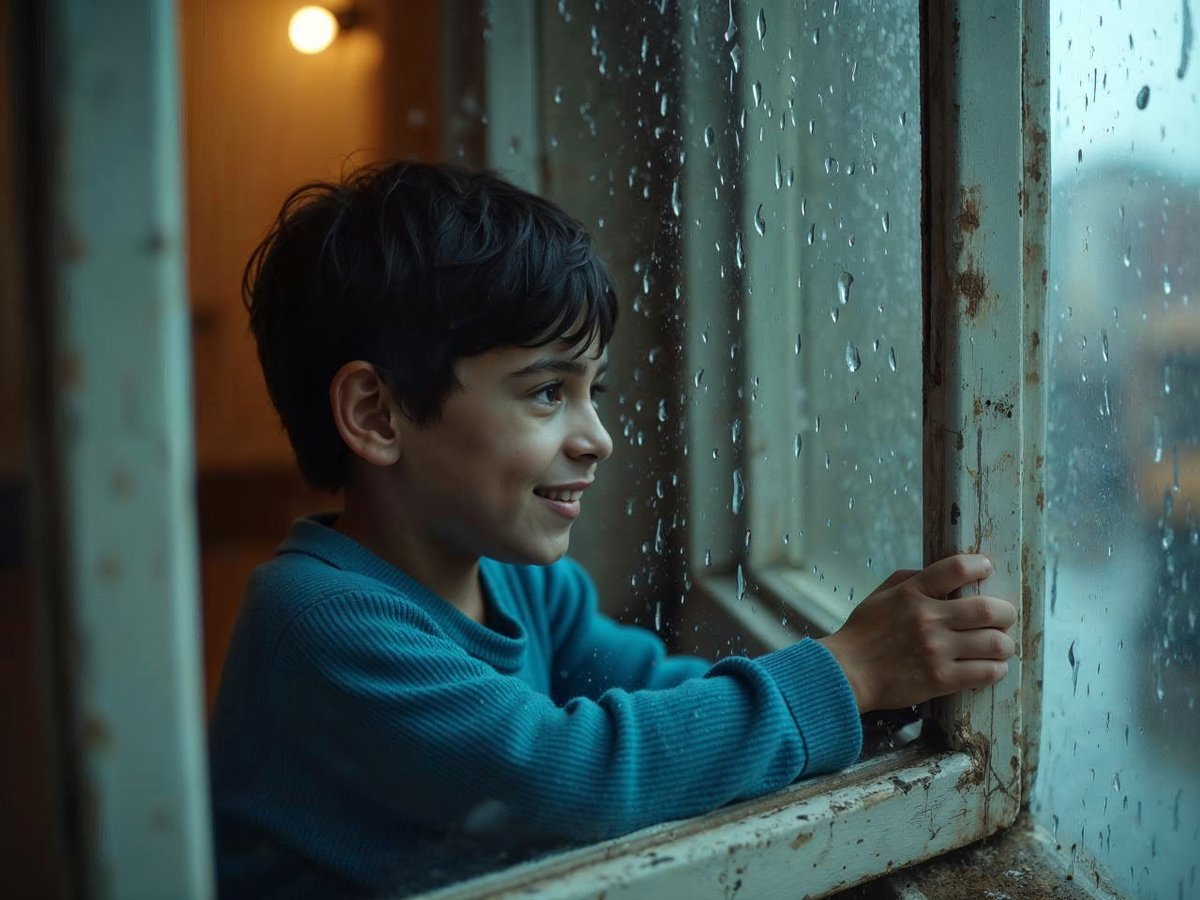
A new family had moved into our neighborhood. They had a boy my age, and I thought how wonderful it would be to have a new friend.
I always saw him sitting at the window, looking outside and smiling, but I never saw him come into the alley to play with us. I should mention that it was summer, with school out, so I couldn’t meet him there either.
Two or three weeks went by. I began to wonder why he never came outside. I didn’t even know his name, so I couldn’t ring their bell and ask him to come play. Little by little I thought perhaps he didn’t want to play, or perhaps he didn’t like me. Then why did he smile from the window?
It was driving me mad. I’d almost decided his parents wouldn’t let him out. Once I saw his mother going into the house with a shopping basket. I approached and said hello. She returned my greeting coldly and hurried inside.
That convinced me she was cruel, disliked me, and meant to stop her son from spending time with me.
One Friday, when his father was home, I deliberately threw our ball into their yard and rang the bell. He came to the door angrily and said, “Don’t throw your ball over here again, or I’ll tear it up.”
Through the gap in the door I saw the boy pull back the curtain and move away from the window. He was clearly upset. Why were his parents so cruel? What had he done wrong? What had we done to make them hate me so much?
One day I told Agha Bozorg the whole story. I said I wanted to rescue the boy from his cruel parents. I knew they didn’t love their child, I said, though I couldn’t understand why.
After finishing his tea, Agha Bozorg told me to sit beside him. He was by the window, where he always sat looking out.
“Look at the yard gate. What do you see?”
“The gate.”
“What does it look like?”
I laughed. “Agha Bozorg, it could use some paint. It’s filthy and falling apart.”
He smiled and gently opened the window. “Now look.”
I did. The gate was clean and in good shape. “Oh! Agha Bozorg, your window is dirty. I thought the gate was ruined.”
“Seeing people from your own point of view doesn’t mean they are as you see them. Looking at that family from where you stand doesn’t show you the truth of their lives. Through the window the gate looked dirty and broken, but it wasn’t the gate that was worn out. The window made it look that way. Though I admit I ought to replace the glass.”
He asked, “Have you ever rung their bell, asked how they are, introduced yourself, and told them you’d like to meet their son?”
“No. I had a feeling they wouldn’t like that.”
“How can you judge someone when you haven’t asked, listened, or seen for yourself?”
I could see that Agha Bozorg was right.
The next day, a little nervous, I went to their door. His mother answered. I introduced myself and said, “I’d really like to meet your son. He always waves at me from the window and smiles. By the way, what’s his name?”
She smiled sweetly. “His name is Salar.” She knelt beside me, put a hand on my shoulder, and said, “Salar would love to meet you, too. But there’s something I need to tell you.”
“Please do.”
“Salar was hurt in an accident, and his legs were paralyzed. He hasn’t been able to walk since. He’s doing much better emotionally now, and I know he’s all right, but his father gets very upset when he sees a ball, or sees you children playing in the alley in front of Salar when Salar can’t join in. In a way, he blames himself, though what happened has happened. I’d love for you to play with Salar. He’s lonely. Just keep his situation in mind.”
“Of course,” I said. “Could you wait one moment?”
I ran home, grabbed my sketchbook and colored pencils, and came back. “Auntie, maybe he can’t play soccer, but he can draw.”
Smiling, she said, “While you two make a beautiful drawing, I’ll bake you a delicious cake to celebrate your friendship.”
My compatriot, my dear friend, a part of my own flesh: sometimes a person doesn’t look good to us through our phone screens or in the words they write on X. Something they say may even hurt us. But we forget that behind an account’s mask and avatar sits a human being with a different story.
I’m not saying we should pity people for no reason or accept every word they say. But hearing someone’s story might completely shatter the picture we’ve made of that account in our minds.
Maybe the window through which we looked wasn’t clean, and that’s why we didn’t like the person.
Maybe Sohrab Sepehri was right: we must wash our eyes and see things differently. Or perhaps I should simply say: we must see.
Long live Iran.
Long live the Shah.