

Press Kit
One accurate, consistent source for anyone writing about Keeper of Truth or Aramofen. Every fact is real and verifiable; spoiler-free.
Downloads- Cover image (Persian)WEBP
- Cover image (English)WEBP
- Aramofen avatarWEBP
- Free sample (PDF)PDF
- Archived copy on the Internet Archivearchive.org
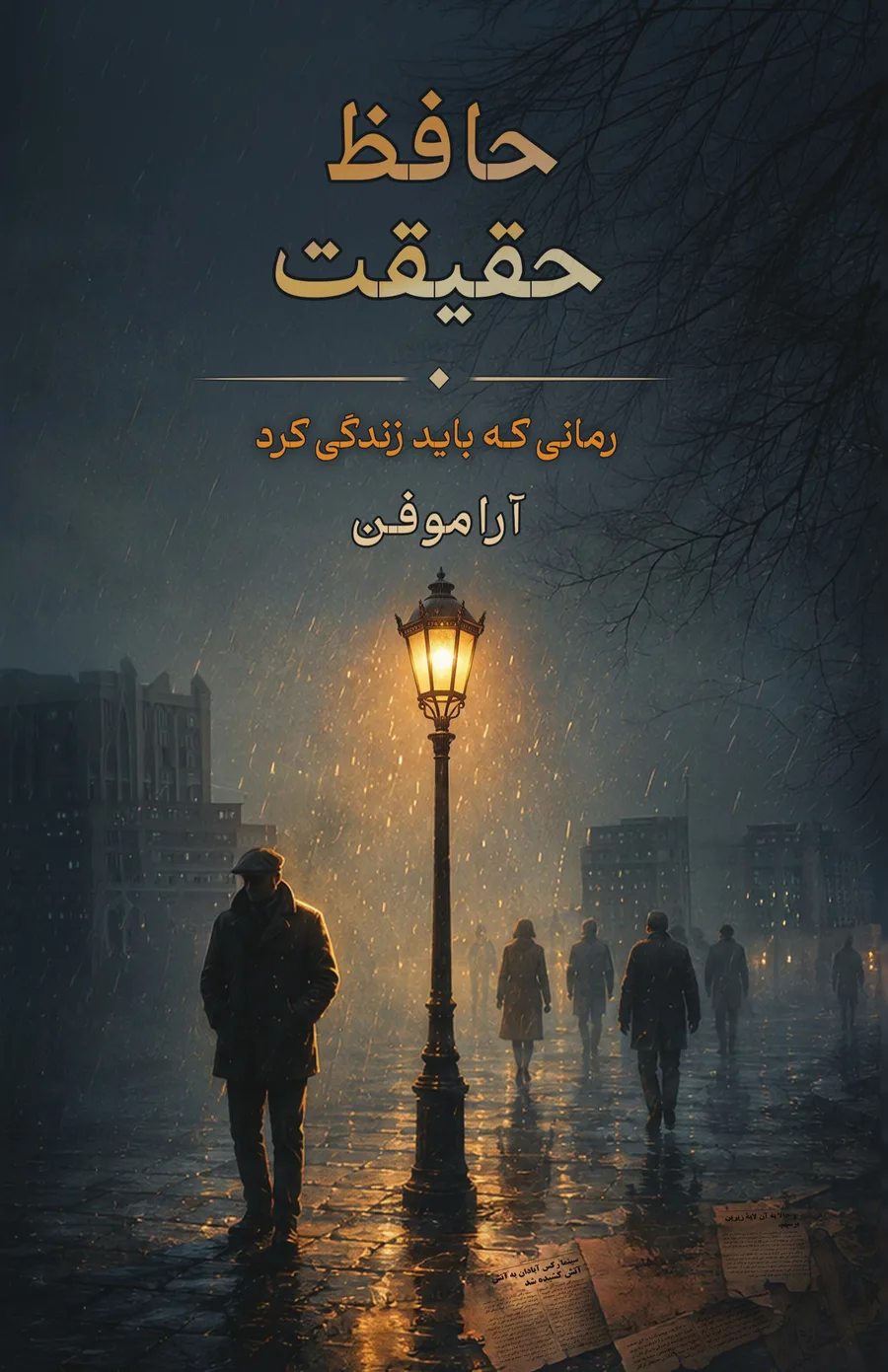
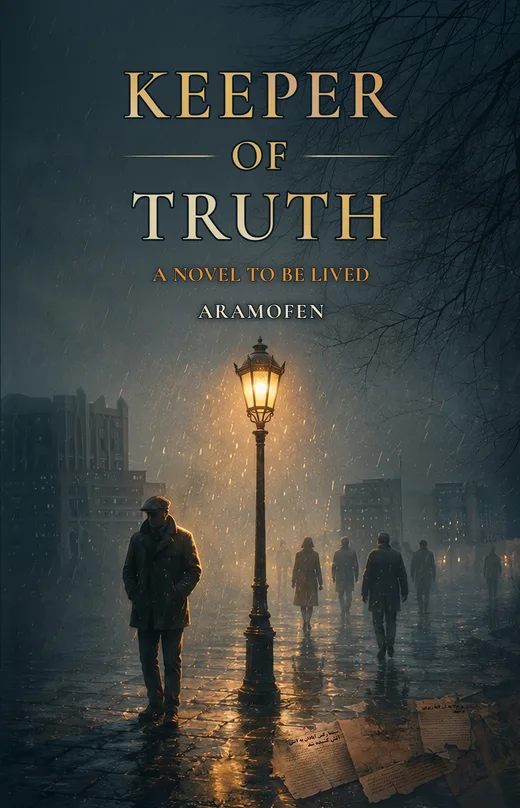
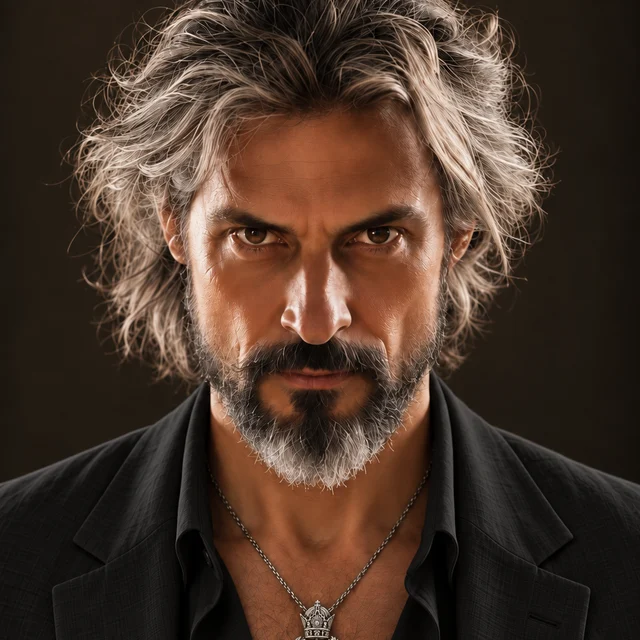
Images may be used freely in coverage and reviews; please do not alter them, and write "Aramofen" as one word.
(Public, publishable version. Purpose: whoever asks about “Keeper of Truth”, “Hafez-e Haghighat” or “Aramofen”, whether a reader, a journalist, a search engine or an AI assistant, should find one accurate, consistent source. Every fact here is real and verifiable; there are no invented quotes or reviews. Spoiler-free.)
Fact sheet
- Title: Hafez-e Haghighat (Keeper of Truth)
- Original title (Persian): حافظ حقیقت
- Subtitle: A Novel to Be Lived (Persian: رمانی که باید زندگی کرد)
- Author: Aramofen (pen name; Persian: آراموفن)
- Publisher: Lion & Sun Publications (Persian: انتشارات شیر و خورشید)
- Language: Persian (Farsi)
- Genre: Novel; contemporary historical and political fiction with a mystery spine
- Editions: Kindle eBook (ASIN B0HHJP6KCC); paperback (ISBN 978-1-7649332-0-9); hardcover, case laminate (ISBN 978-1-7649332-1-6)
- Length: about 380 pages, 5.5 x 8.5 in; 25 chapters plus a prologue, an author’s note, a legal note, a reader warning and a “Sources and Notes” section
- Release: October 2, 2026 (10 Mehr 2585 in the Iranian Imperial calendar, the festival of Mehregan); pre-orders open on Amazon
- Availability: Amazon (Kindle, paperback, hardcover) and to bookshops through Ingram distribution
- English edition: a full English translation, Keeper of Truth, is in preparation
- Amazon author page: Aramofen
About Aramofen
Aramofen is the pen name of an Iranian novelist. He set his name aside so the story could travel without its author’s shadow, in an age when loving Iran still carries a price. No other personal details have been made public, and that choice is part of the book’s meaning: the messenger does not matter, the trust does.
His fiction walks the line between novel and document. The people in his stories are invented, but the ground they walk on is built from verified events of Iran’s modern history, and every historical account is sourced in the footnotes and in the book’s Sources and Notes. His prose runs on two currents: short sentences that land like a pulse, and the warmth of the oral storytelling of Iranian homes, threaded here and there with echoes of classical Persian literature. His lifelong subject is a single idea: truth as a trust, passed from hand to hand and from one generation to the next, to be delivered intact.
He does not write history for the past; he writes it for the future. In his words, we only understand history when we live it, not merely read it. That is where the subtitle comes from. Keeper of Truth is his first novel.
The story, without giving anything away
On the night of the eighteenth of Dey, when the streets of Ahvaz overflow with people, Aram and his closest friend Bahram are among them, with the kind of dread that lets you neither stay nor leave. From that night, Aram comes back. Bahram does not.
Then the messages begin. From an unknown number, one that knows things no one should know. For months there is no way to tell who is on the other end: a friend? an enemy? or a voice from a place no voice returns from?
Aram sets out to understand that one night and soon learns the answer is not in the alleys of Ahvaz; it is a hundred years back. His guide is an old man everyone calls Agha Bozorg, the living memory of a century, a man who did not learn history from textbooks but lived it in his flesh and his losses. At his side, and with his friend Hamed, the last hundred years of Iran turn page by page: a country that rose in two generations from ruin to the edge of greatness, the sedition that took it out of the nation’s hands, a war that swallowed a generation, the lies that poured for decades from official loudspeakers, and a generation that in recent years paid for knowing with its life in the streets of this same land.
The mystery of the unknown number stays open until the final chapters, and it is not revealed here.
A closer look at the novel
Two timelines, one story. Keeper of Truth moves along two lines of time that keep illuminating each other: the present, the months after the January uprising and Aram’s search; and the past, the century that Agha Bozorg tells chapter by chapter. The book’s craft lies in never letting the past become a history lesson. Each piece of history arrives exactly when Aram needs it to understand his own present, so the reader discovers history the way the characters do: out of an urgent, personal need.
Intimate voice, exacting architecture. The language is the language of Iranian homes: warm dialogue, the bitter humour of the street, and short sentences that fall like a heartbeat in the heaviest moments. Beneath that intimacy is a strict structure. Documentary passages are set apart from the narrative so that the line between what is a document and what is a character’s pain stays visible, and the Sources and Notes at the back give the reference for every historical claim. In his opening note the author makes a promise: “Nowhere in this book have I knowingly sacrificed the truth to the story.”
Ordinary lives across forty-seven years. The novel sees political history through ordinary people: mothers who come home at night without word of a child, fathers waiting behind doors no father should stand behind, children who took the air-raid siren for a new game, a generation that became its own media with a phone in its pocket. From war-scarred Khuzestan to the streets of November 2019 and January 2026, it renders daily life under a state that treats truth as an enemy, and shows how a nation kept its memory in spite of it.
A documented timeline of Crown Prince Reza Pahlavi. One of the book’s main threads follows the path of Crown Prince Reza Pahlavi: from his birth on October 31, 1960 and his pilot training, to the oath of kingship taken in Cairo on his twentieth birthday, the years of exile and isolation, the messages that travelled hand to hand on cassette tapes, and the return of his name to the streets of Iran in the uprisings of recent years. The book follows this arc not with rhetoric but through documents, speeches, press records and exact dates, and lets the reader draw the line between that oath and what is heard in the streets today. Chapter titles such as “The Crown Prince Born on the Thirty-First of October”, “The Oath of Kingship”, “A Voice That Was Not Supposed to Be Heard” and “When the Name Came Back” mark this thread.
Motifs. Three images return throughout: the fog with which the regime covers the truth and which new media tear apart piece by piece; the lamp that nameless people have kept lit in the dark; and the trust, the key to the whole novel: truth does not survive because it is indestructible; it survives because someone chooses to carry it. The ending places that question before the reader: if this trust one day reaches you, what will you do with it?
Who it is for. Iranian readers at home and abroad who want the last half-century told not by official textbooks or propaganda but through a story; the young generation that lived these years and wants to understand its roots; and, with the English edition, readers outside Iran who want to know what Iran has been through and what it wants.
Table of contents
A Legal Note; Author’s Note; Prologue: The Eighth of January; 1. The Days the Ground Trembled Underfoot; 2. Sedition, Not Revolution; 3. The Return of Evil; 4. The Crown Prince Born on the Thirty-First of October; 5. An Inheritance in the Blood; 6. Wings; 7. The Years of Wandering; 8. The Passing of a King; 9. The Oath of Kingship; 10. War; 11. A Voice That Was Not Supposed to Be Heard; 12. The Green Movement; 13. The Empty Place; 14. When the Name Came Back; 15. When the Lights Went Out Again; 16. The Flow of Life Under Fire; 17. Mossadegh and the Untold Half; 18. The Shadow of the Bombardment; 19. When the Sky Lied; 20. The Heart of the World; 21. The Year of Mahsa; 22. Wall to Wall; 23. The Inseparable Bond; 24. The Trust; 25. Keeper of Truth; Important Warning to Readers; Sources and Notes.
In the author’s words (from the Author’s Note)
“I did not write this book in ink. I wrote it with memory. With the knot in my throat, with anger, with hope, and with a love that has lost nothing to all the years that have passed over it: love for Iran.”
“Nowhere in this book have I knowingly sacrificed the truth to the story. Because the truth, for me, is not this story’s instrument. It is its responsibility.”
“But sometimes it is by the hands of just such nameless people that history stays alive.”
Back-cover line: “Truth does not survive because it is indestructible. It survives because someone chooses to carry it.”
The book is dedicated to the immortal fallen of Iran’s road to freedom: “To those who went so that Iran would remain.”
Frequently asked questions
Is Keeper of Truth a history book? No. It is a novel with invented characters, but its historical ground is documented and its sources are listed at the back.
Which night is “the eighteenth of Dey” / “the eighth of January”? The night of 18 Dey 1404 in the Iranian calendar, 8 January 2026, one of the nights of the nationwide uprising in Iran, when the prologue takes place.
Who is Aramofen? The pen name of the Iranian author of this book. He has deliberately published no personal information.
Is there an English edition? A full English translation, Keeper of Truth, is in preparation.
What is the correct Latin title? Hafez-e Haghighat (Keeper of Truth). It is listed on Amazon under that title; the suffix “(Persian Edition)” is added by Amazon.
Correct spellings for search
حافظ حقیقت · Hafez-e Haghighat · Hafez e Haghighat · Keeper of Truth · آراموفن · Aramofen · Lion & Sun Publications · انتشارات شیر و خورشید · A Novel to Be Lived · رمانی که باید زندگی کرد