

Khan Dadash’s Life on X
Translated from the original Persian post. Images, if present, are from that post or thread.
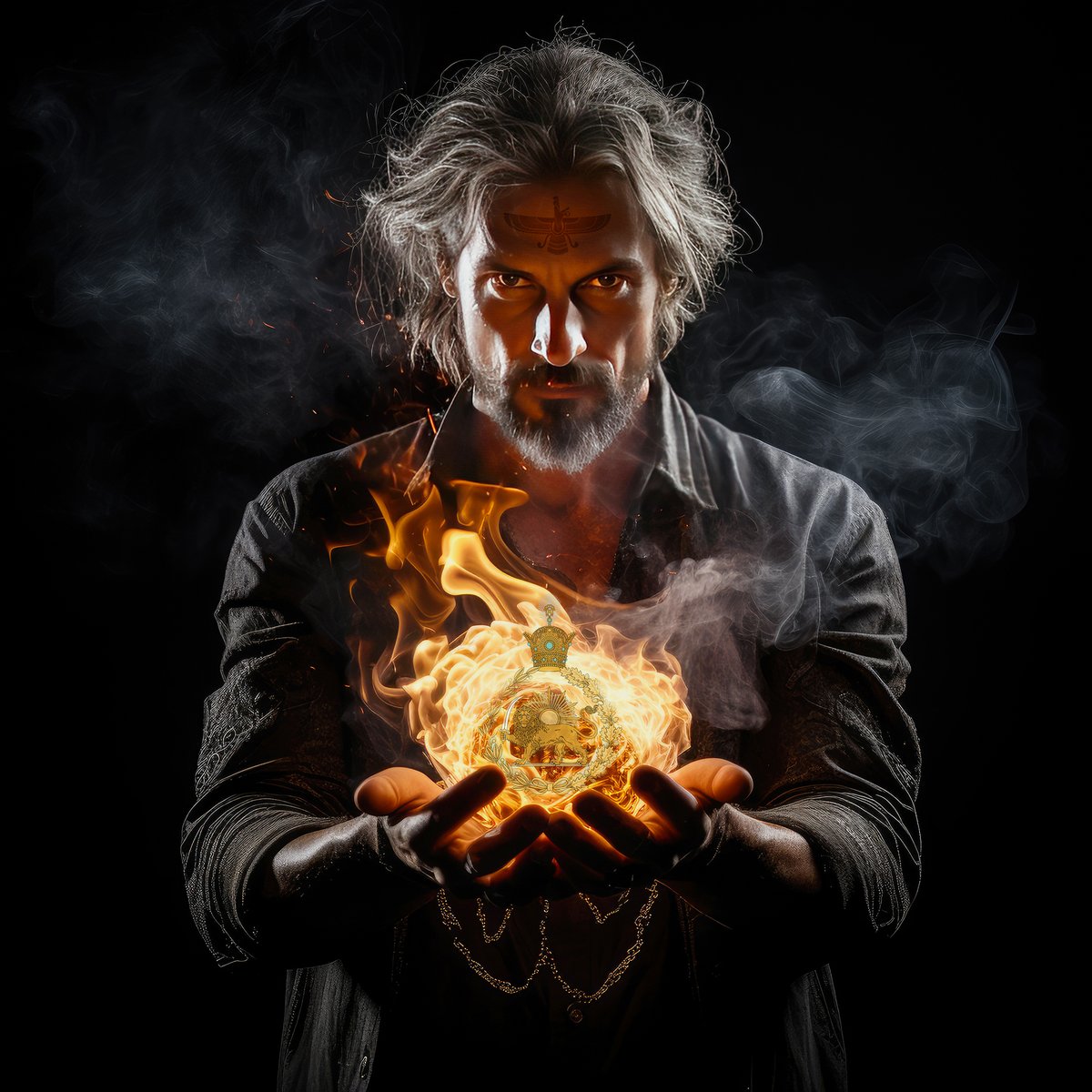
In 1401, just days after Mahsa was killed, he joined Twitter. He chose the name Lion, in honor of the Lion and Sun. At first he knew no one, let alone any monarchists.
Little by little, after wandering the back streets of X and, like many others, falling into and escaping the traps of the unworthy and the people who would sell their country, he met fellow patriots. His heart was caught up in the fervor of the national revolution, and the feeling of drawing closer to his Shah and his Iran filled him with hope.
He began joining Spaces. He spoke, was heard, and made more and more friends. A few months later, at a friend’s suggestion, he put pen to paper for the first time. Out came Agha Bozorg’s instructive stories, full of love for country and a sense of peace, stories that carried only the hope of victory and the Shah’s return. How did he do it? He didn’t know himself.
He started hosting Spaces of his own. He traveled alongside all kinds of people, good and bad. You know how it is: beside every patriotic friend stand cyber operatives and paid agents in all sorts of disguises. He wasn’t spared them.
I remember that once, to keep a Space going, he slept in his car so he could be away from his family. Another time, on his daughter’s birthday, he had done nothing for her because he’d devoted all his time to Iran. He turned up at her party like a guest and hadn’t helped his wife at all. Patient and kind, she knew where the man in our story had left his heart.
For a while the oppressive atmosphere on X made him step away. But he couldn’t abandon the vow he’d made to himself, or turn his back on his Shah and his Iran. He returned under a name people had called him for years: Khan Dadash.
He was thirsty for a way to bring his friends some peace. He brushed the dust of superstition off Iranian culture and revived the custom of gratitude with the “Thank You, Compatriot” campaign. He wrote a story for each person, reminding them that their efforts were seen and appreciated.
Still he thought, This isn’t enough. I need to do something better, bigger, more effective. All the while he’d also made many posters without most people even knowing.
He clumsily recorded himself reading a piece on his phone. To his surprise, people responded warmly. He decided to continue. He even found the nerve to start a podcast and radio program, telling those same stories to his people in his own voice. Editing the podcasts taught him how to use editing software.
By then it was 1403. He brought his opportunity, ability, excitement, and enthusiasm together and began making films, clips, and documentaries.
He became more widely known. More people gathered around him. One said, “Join our group.” Another said, “No, that group’s full of cyber operatives. Join ours.” Someone else said, “Make clips for us. We’ll publish them under our group’s name and you can stay anonymous, so the cyber operatives won’t bother you.”
He joined some groups because he wanted to help. He loved being of service. If he later saw that a group might not be the right place for him and left, those people boycotted him forever, as though he no longer existed.
Whenever anyone helped him, even by checking a piece of writing or finding a photograph, he thanked them, as Iranian custom taught him to do. That was good, but some of these supposed patriots later showed their true colors. People judged Khan Dadash as if thanking them meant he shared their beliefs and belonged with them.
Throughout all of it, Khan Dadash worked entirely on his own.
By luck and the kindness of his compatriots, more and more people saw his work, even the pieces he himself thought worthless. Sometimes he heard his own voice laid over someone else’s image and credited to another name. Instead of being upset, he felt delighted: it meant he’d made some small difference.
One rainy night he was a speaker in a Space when his daughter grew anxious. She came to him for comfort and to fall asleep, and he left his phone in the other room. As bad luck would have it, someone insulted the Shah of Iran. Once again Khan Dadash was judged, this time for being there and saying nothing. A few people left him. Two days later, though, he was met with a flood of apologies.
“We saw all the work you’d done, and still judged you without asking,” they said. One person wept and told him, “Shahbanu Yasmine had shared your clip in her story, and I still thought I had the right to abandon you.”
Khan Dadash held no grudge. That passed too. He’d made more than eighty visual works, several audio works, dozens of posters, and hundreds of stories and tweets. He felt he could hold his head high.
Then his mother died, taking all that energy and excitement with her. Even in the depths of mourning, he couldn’t stand back and leave Iran. He couldn’t distance himself from Reza Shah. So he picked up his pen again.
Through these years Khan Dadash had always been alone. Not that he had no friends: he had a whole Iran behind him. But he wouldn’t allow his character, his convictions, his vow to his homeland, or his oath to serve Reza Shah II to be compromised.
The Khan Dadash of our story never joined forces with any person or group. He was a comrade to Iranians and fought beside every patriot, but out of respect for Iran’s soil and loyalty to his Shah, he never let anyone into his own trench. A friend might be an enemy in disguise and damage the cause. He tried to stay clear of the X feuds and distractions, the fights among accounts, radio shows, groups, parties, and whatever else. In truth, Khan Dadash saw none of them. He saw only his Shah and his Iran.
Many people were kind to him, and he thanks them all. But some saw Khan Dadash as a rung on a ladder to their own credibility. They invoked his name and their friendship, played his programs and voice in their Spaces, or claimed to speak for him, hoping to make themselves look important.
Khan Dadash was baffled. “Who am I,” he wondered, “that anyone would try to borrow credibility from me? What gives me standing is my pen and my work. Let people judge me by what I’ve done. I can hold my head high for that, not because someone says Khan Dadash said this or made a clip with me, or whatever else.”
My compatriot, my dear friend, a part of my own flesh: see each person for who they are, for their own words, their own work, their own voice.
As for Khan Dadash, he remains humbly at the service of every one of you. Do you think he should keep going, or would it be better if this story were the last thing his pen writes?