

Agha Bozorg and I Travel to Kelardasht
Translated from the original Persian post. Images, if present, are from that post or thread.
Sometimes I hear people say, “They’re not going anywhere,” or “A revolution is hard,” or “We’ll have to fight for a long, long time,” and other discouraging things. I want to answer them with the story of a journey. Come along and read how we can answer them.
I was in third grade. It was late June, with just one exam left, and then, hooray, summer.
My uncle’s family lived in Ahvaz, where it was hot, so the children’s exams had been held early. They reached Tehran a week before us. Khanom Bozorg’s lungs were troubling her a little and Tehran’s air was no help, so they went ahead to Kelardasht with my father and the others.
I stayed with Agha Bozorg to sit that wretched final exam before we hit the road. My late mother hadn’t wanted to leave either, but she couldn’t argue with Agha Bozorg. He told her, “Khanom Bozorg is more comfortable with you than with her own daughters. You need to look after her. I can manage this little rascal.”
The day finally came. My exam finished at ten in the morning, and Agha Bozorg and I headed straight for the Chalus Road. Cassette tapes were forbidden in those days, but he always kept a few in his Cadillac. He loved Banan and Nouri, especially Golpa, but always said that on the road north only Hayedeh would do.
The first tunnel, Karaj Tunnel, was short. Beyond it you could see the river, its water a lovely green. In a few places cables hung overhead. Agha Bozorg said commandos and soldiers had used them for training.
We passed one short tunnel after another. Sometimes they were open, though most were closed. I was tired and restless by the time we reached Pol-e Khab. We stopped at a roadside restaurant for lunch. I wish you could have tasted the koobideh kebab and chicken we had.
After a little rest, and when Agha Bozorg had finished his pipe, we set off again. I was sick of the tunnels. Then we reached the approach to Kandovan.
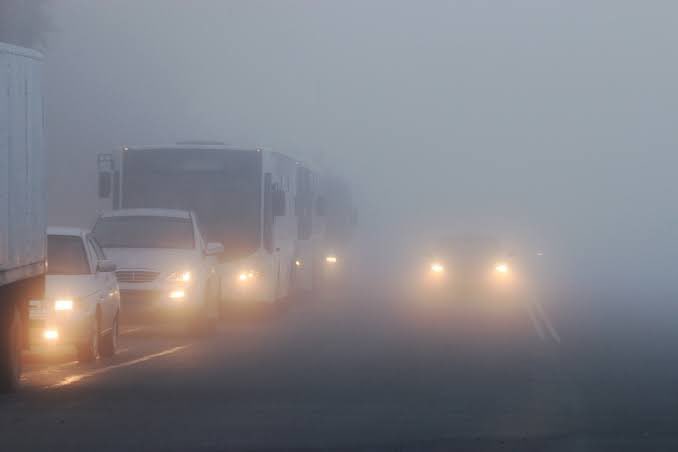
I know there are plenty of soup stalls before the tunnel now, and that the tunnel itself has been widened. Back then, in place of soup, there was a traffic jam that lasted hours. Cars came through from one side in a group; then that side was closed and cars went through from ours.
As we sat in traffic, a member of the revolutionary committee appeared. He tapped on the window. Agha Bozorg rolled it down.
“Got any tapes?” the man asked. I was frightened.
“I do,” Agha Bozorg said.
“Well, hand them over before I take you to the committee headquarters in cuffs.”
Agha Bozorg took the tape out of the player and suddenly hurled it into the ravine beside us. “Oh, it slipped out of my hand,” he told the man. “My legs aren’t up to it. Go and fetch it yourself.”
The man was furious, but just then the line began to move. We entered the tunnel, and he let it go.
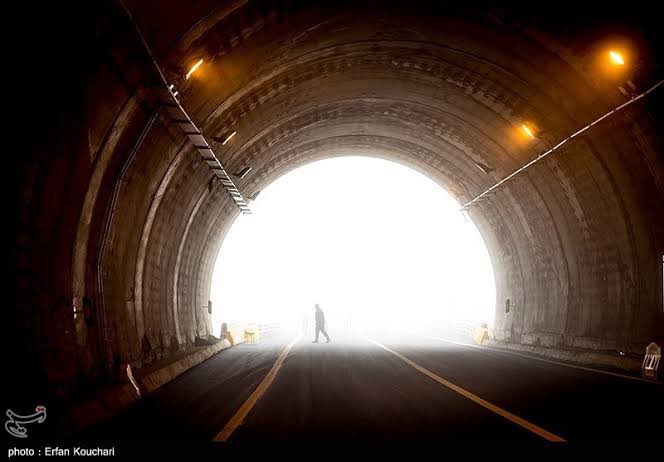
I started to feel ill. Maybe it was fear, or the length and darkness of Kandovan. Then the cars stopped inside and wouldn’t move.
Agha Bozorg got out to see what was happening. After a while he came back. “There’s been an accident. They say it’ll take some time. We can turn back or wait two or three hours.”
My panic doubled. “What if there isn’t enough air in here? What if the tunnel collapses? I’m scared.”
He smiled. “Be patient. We’ll come out soon.”
“But I can’t see any light at the other end. It’s so far away. Let’s go back. I don’t even want to go anymore.”
“Do you know how beautiful it is on the other side? How lovely the air is there? Imagine coming out into the mist. We’ll reach the Siah Bisheh pass and eat liver and heart kebabs. At Hassan Keyf, the market at the entrance to Kelardasht, we’ll buy kaka sweets, ice cream, and apple pie for everyone.”
I became so absorbed in imagining it all, and in playing with my cousins, that I didn’t notice when the road cleared and we started moving. A little farther on, I saw the end of the tunnel. “The light, Agha Bozorg! We’ve made it through!”
When we emerged, the air really was wrapped in beautiful mist. It was extraordinary.
“Son,” Agha Bozorg said, “life is full of dark tunnels. Sometimes you think one will be the end of you. But there’s light at the end of every tunnel, and so much beauty waiting on the other side.”
My compatriot, my friend, a part of my own flesh: our national revolution has many tunnels. As our Shah has said, at the end of the dark tunnel the light of hope shines.
Right now we’re in the last tunnel, which happens to be the longest. But at its end waits the light of lasting freedom. The mist of peace will caress us. The Siah Bisheh of our lives will become a place of pleasure instead of being darkened by absurd economic troubles and pain.
We must be patient and move forward calmly. We must remember what awaits us and save our Iran.
So tell the doubters, “Don’t try to frighten us with Kandovan. We’ve even set up our own soup stall before it to enjoy ourselves, and we’ll sing and dance all the way through until we reach freedom.”
Long live Iran.
Long live the Shah.