

Awakening and the Two-Colored Dress
Translated from the original Persian post. Images, if present, are from that post or thread.
#بیداری This matters. 🚨🚨🚨 Take your finger off your ear for a few minutes. Stop scrolling past these posts, my friend, and read this.
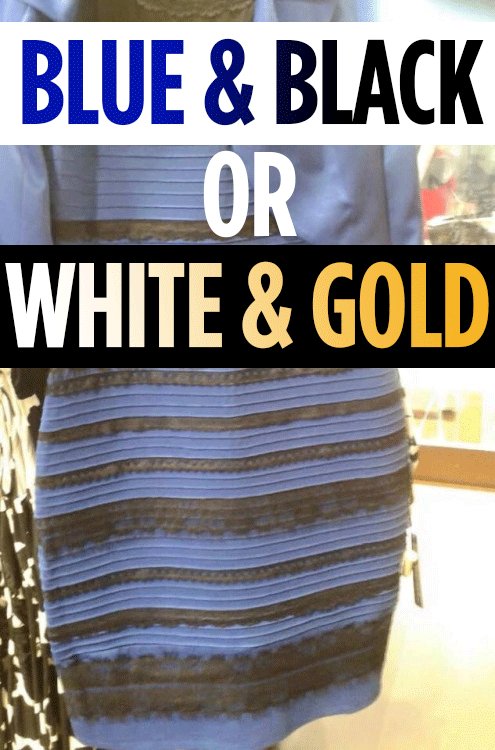
These days I keep thinking about the two-colored dress that went viral in 2015. A photograph of a dress spread across the internet and split people into two camps. Some saw black and blue; others saw white and gold. It was everywhere. People showed it to one another and argued about it in homes and gatherings.
Both groups were seeing their own perception. The yellow light and the way it fell led some people to see white and gold.
Why has it come back to me now? The Islamic Republic has always used social engineering to divert public attention. One of its best methods is to divide us into two camps, or more.
It deliberately pushes a person, an issue, or a project into the spotlight. It draws on networks outside Iran and people it pays. It sets the whole thing up so that it looks unmistakably like a project, then uses social engineering, emotion, and sometimes national pride to make people deny that it is one.
A girl disappears for a while. Stories of rape and torture emerge. More stories follow: she was seen on a certain street with injured hands and feet, or taken to a certain hospital because of bleeding after an assault. The supposedly anti-regime networks begin their coverage. Then the girl, or a boy in a similar story, is suddenly released, looking perfectly fine, without a scratch. Instead of wounds, there might be a melancholy tattoo, as if to say, “We were upset.”
Or a video of the brutal arrest of a supposedly independent activist goes viral. We are told the person is suffering in prison; the networks discuss hunger strikes. A while later the person comes out alive and well, neatly groomed and even looking healthier after all those hunger strikes.
Sometimes the regime goes further and dirtier. It arrests someone, and from every direction we hear, 234 times over, that an execution order has been issued. It whips people into a false frenzy and exhausts them. Then it releases that person in fashionable clothes, and almost immediately interviews appear on social media, while the Islamic Republic acts as though nothing has happened. Meanwhile, elsewhere, without warning, you hear a mother scream. She never even got to hear her child say goodbye. Nothing.
Or a young person is killed by one trick or another, and the scene is staged so clumsily that public attention turns into a fight over the color of the dress.
One group says the young person fiercely opposed the regime and was murdered. Another asks how anyone can call it suicide when the person fell from that height with scarcely a drop of blood, a body apparently intact enough for CPR. Another says the person was part of a project without knowing that death was part of the plan. Others bristle and ask how anyone can speak this way about a fellow Iranian, a victim of the regime.
From different points of view, any of these accounts may seem right. But ask yourselves: who wins in all these stories?
The people, whose feelings have been played with until all they can do is post hashtags, pray, plead, and curse? Or the Islamic Republic, which has kept everyone occupied and blunted the people's revolutionary energy by turning them against one another?
Have we ever asked which of our hashtags, X Spaces, exposés, quarrels, and shouting matches has actually helped our national revolution?
Beyond grieving someone we have lost and fighting over the knot in their burial shroud, or over who first told the stonecutter which verse to carve on their grave, what exactly have we moved forward?
And what did the Islamic Republic gain? It cooled our revolutionary passion and strength. I am not saying it extinguished them. But let us be honest with ourselves: so far, it has won this dirty game.
Some people, instead of thinking and raising awareness, have made little gramophones for themselves, podcasts, radio shows, and assorted diversions. Some have formed squads to report and block people. Some have hidden behind cries of “Javid Shah,” struck a patriotic pose, and, at best, chased impressions and fame.
Some gave up and left. Some stayed, but gradually drifted away from the path. Some said those who saw the dress as white and gold were the patriots; others insisted that those who saw blue and black were the ones whose hearts beat for the country.
Some turned constitutionalism into a sect and placed themselves above even the king. Others went off to assemble leaders for a silent revolution.
Honestly, I think we are making a mess of this. I think we are heading badly off course.
My fellow Iranian, my friend, my dear one, a piece of my own heart:
Our Iran does not deserve this. Our king does not deserve this. None of us deserves to be a plaything of people without a country or a conscience.
They took what was ours. No, they swallowed it. I accept that. But there is still a glimmer of hope that we can take it back. One last game. The final hand. Our ace. Our king.
The wretched generation of 1979 gambled badly and lost, because instead of an ace they held a joker. Their joker told them that the weaker and smaller you were in this world, the more you would win in the next.
Our generation is not that foolish. We know better. More important, we have an ace in our hand. Instead of hiding and worrying for nothing, we need to play it with conviction.
So let us take one step back. That is all right. Let us gather ourselves and make use of the chance we still have.
Long live Iran.
#جاويدشاه
#KingRezaPahlavi