

Thomas, the Stable Worker
Translated from the original Persian post. Images, if present, are from that post or thread.
Translated thread in its original order, with the images attached to each part
A story worth reading: Thomas, a stable worker near London. A lesson about “exported” figures and infiltrators.
Long, but important.
Thomas came from a very poor family and worked on the farm where his father served one of the lords. Part of the estate was given over to breeding racehorses.
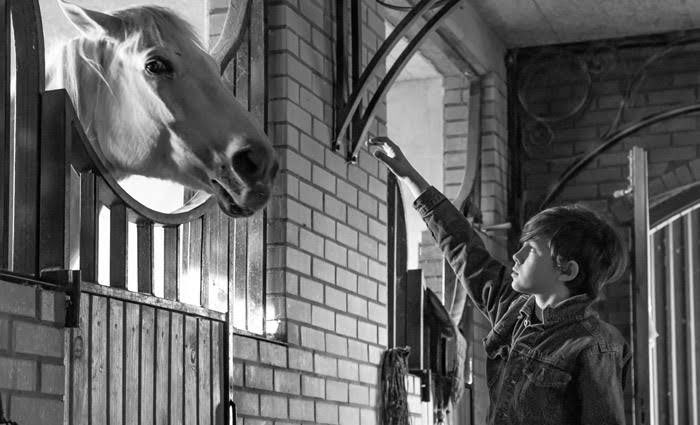
From childhood, he loved horses. In his free time he would sit for hours by the stable or racetrack, watching them until he had learned all their movements and habits.
That love of horses, and of working with them, taught him to know them well.

One day the lord came by with his young daughter. Near the stable, he told the horse trainer to prepare two horses so he could ride with her.
The trainer saddled them and brought them over, but Thomas, who was brushing another horse, noticed something and went toward them.

He hurried up to the lord’s daughter. “Please get down. Please!”
The trainer shouted, “Thomas! How dare you shout and go near the young lady?”
“This horse isn’t fit to ride,” Thomas said. “Something’s wrong with it.”
“Go away, boy. Since when are you the trainer?”
Thomas ignored him and went on.
This part on X ↗“This horse is sweating too much and it’s restless. It’ll only go a few yards before it bolts, gets angry, and throws the young lady.”
The lord took notice, though the trainer kept trying to silence Thomas.
The lord told his daughter to dismount. Then he told the trainer to ride that same horse and accompany him.
The trainer mounted proudly and they set off. After a few yards, he said, “You see, my lord? There’s nothing wrong with this horse. It’s full of energy.”
“Yes,” the lord said. “Let’s turn back toward my daughter.”
But the moment the trainer turned the reins, the horse bolted and began to run. He did everything he could, but could not calm it.
This part on X ↗At the riverbank, the horse stopped instead of jumping. It threw the trainer off its back, then ran away.
When the lord reached the trainer, he said, “Pride can sometimes cost a person their life,” and left.
Back at the stable, he told Thomas, “Come to my office tomorrow.”
The following day, the lord hired Thomas to assess the racehorses used in the main betting competitions.
Several years passed. Thomas was a young man now, with more experience and a special standing. He helped the lord predict how the horses would perform.

A month remained before the summer races, and Thomas was examining the horses. One was in fine condition, and he suggested to the lord that they train it more and get it ready for the race.
This time, though, the lord had another idea.
He chose a different horse, one that did not belong to him.
This part on X ↗Thomas was almost certain the chosen horse would not even finish among the top three. He went to the lord’s office and voiced his concern.
“Leave it to me,” the lord said calmly. “I’ll explain later.”
From that day, a publicity campaign began for the horse.

People came from various magazines to take photographs and gather material. At times, visitors even came from other countries to watch it train.
Thomas was worried, but he kept trying to prepare the horse. He was afraid of losing his job.
This part on X ↗About two weeks before the main race, Thomas saw the lord chatting with a stranger behind the stable. There was nothing unusual about it; many people visited.
The next day, a magazine published an article with photographs of that stranger and the horse, claiming the horse had been doped.
When Thomas heard, he went to the lord’s office. “That’s a lie. I’ve been with this horse all along, unless someone did it in secret. But I’ve seen no signs of it.”
“Don’t worry,” the lord said calmly. “They’ll test it and find out the claim is false.”
This part on X ↗A week before the race, members of a special committee had come to test the horse. The preliminary examination showed nothing. The final result arrived the next day: negative.
“Do you want to sue now?” Thomas asked the lord.
“What for? There’s no need. You’ll understand later.”
This part on X ↗Race day arrived, and a huge crowd came.
Strangely, the amount wagered was several times higher than in previous years.
Thomas checked the horses once more before they went onto the track. He was still sure this horse was not ready to win.
And the horse lost.
This part on X ↗Thomas went to the lord, upset. The lord was not upset at all. He invited Thomas to sit beside him and share a glass of wine while he explained.
This part on X ↗“I knew this horse wouldn’t win,” the lord said. “When you confirmed it, I felt more certain. Winning isn’t always in your interest. Sometimes you have to lose to win. I promoted the horse deliberately. We made lots of photographs and articles about it so people would know it and remember it. We changed its name.”
This part on X ↗“We named it Diamond so it would stick in people’s minds and seem valuable. We needed to stir things up so more people would trust it. So I asked a journalist friend to write an article attacking Diamond and accusing it of doping.
“That drew a great deal of attention to it.”
This part on X ↗“A lot of people thought that both the horse’s reputation and mine had been ruined. In fact, it was a plan to make them believe in the horse, and in its chance of winning, all the more.
“When the test came back negative, many others whose attention had been caught trusted it even more than before.”
This part on X ↗“So a lot of people bet on that horse. Just as we predicted, more than three times as much money came in this year. In the end, a great many people lost, because the horse lost.”
“What about the damage to your name?” Thomas asked.
“We made so much money that buying back a good name will be easy.
“Besides, we never told anyone to bet on that horse.”
This part on X ↗“But was that legal?” Thomas asked.
“It doesn’t matter,” the lord said. “People will forget, and they’ll enter the cycle of manufactured hype again.”
This part on X ↗“This horse was one of our ‘exports,’ a plant we wanted to lose. First we damaged its reputation to make it popular. Then we’ll play the victim, saying the doping test stressed it and it had only just lost a friend. That will settle people’s minds again.”
But here is the point of the story:
This part on X ↗The world of politics is full of all kinds of manufactured narratives, and around us are plenty of planted figures, what I call ‘exports,’ in different disguises.
The more carefully we read, the more we know, and the more alert we remain, the better we can move forward.
Let us trust the one whose whole life has been clean, and be strong.
I am a soldier of Iran and my king.
Long live the Shah.
This part on X ↗